Home › Speed Bumps, Curbs, and Asphalt Accessories
Control traffic and protect pedestrians with speed bump installation in Fort Lauderdale, FL. We install asphalt speed humps, curbs, and other accessories that slow vehicles, guide parking, and reduce damage to landscaping or structures.
Precision Asphalt Fort Lauderdale provides professional speed bump installation throughout Fort Lauderdale, FL, Florida and the surrounding area. Our licensed, insured crew delivers safe, clean, on-time work with a free estimate before anything begins. Call (954) 335-6036 or request your free quote.
Practical traffic control for Fort Lauderdale properties
Precision Asphalt Fort Lauderdale installs speed bumps, curbs, and related asphalt accessories for properties that actually need to slow vehicles and control traffic, not just check a box. We work on apartment complexes along Sunrise and Broward, HOA communities west of I-95, older retail plazas from the 1970s and 1980s, and newer industrial parks near the airport.
Before talking about layout, we walk the site with you and look at how people really drive through your lot. We note cut-through patterns, delivery truck paths, tight turns, low spots that hold water, and existing damage. A poorly placed speed bump or curb can push water toward your building, cause trailer impacts, or create a trip hazard. Our goal is to help you control speed and parking without creating new problems.
For many Fort Lauderdale properties, we are often working on existing asphalt that is 15 to 30 years old. That affects how the bumps and curbs are attached and how long they last. We evaluate base strength and cracking first, then design the solution around the condition of the pavement so you do not waste money putting accessories on asphalt that will fail soon.
How professional speed bump installation is actually done
Our speed bump installation process is straightforward and methodical so the bumps do their job and hold up in Florida heat and rain.
1. Site layout and measurements: We measure lane widths, turning radiuses, and distances from entrances, stop signs, and crosswalks. In lots like those along Federal Highway, we often recommend bumps 100 to 150 feet inside the entrance so drivers have time to react after pulling off the road.
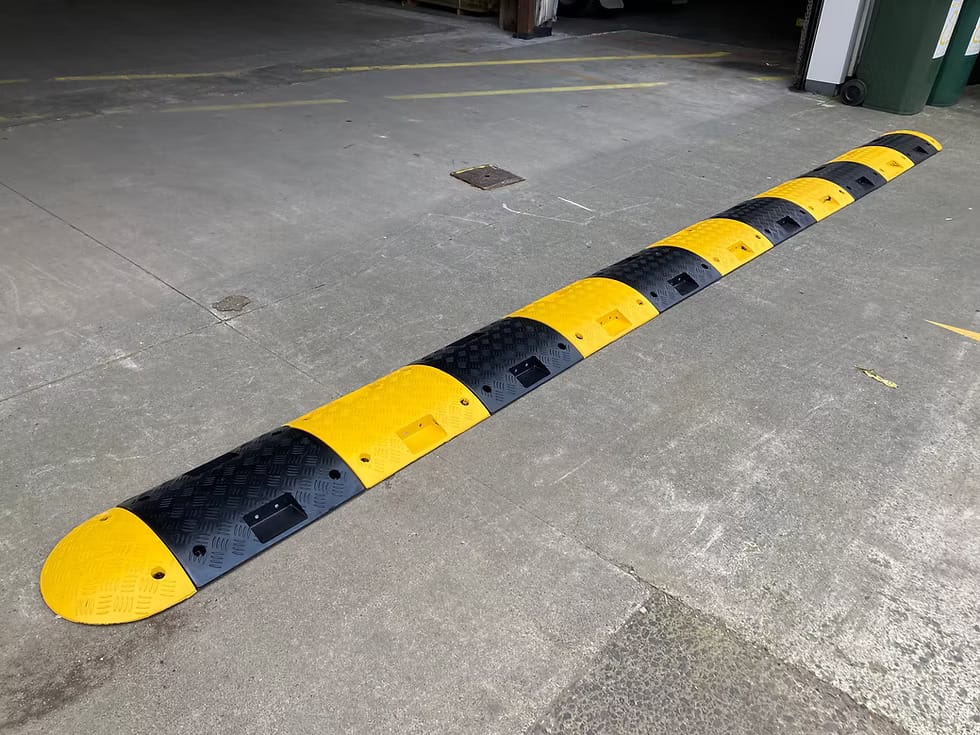
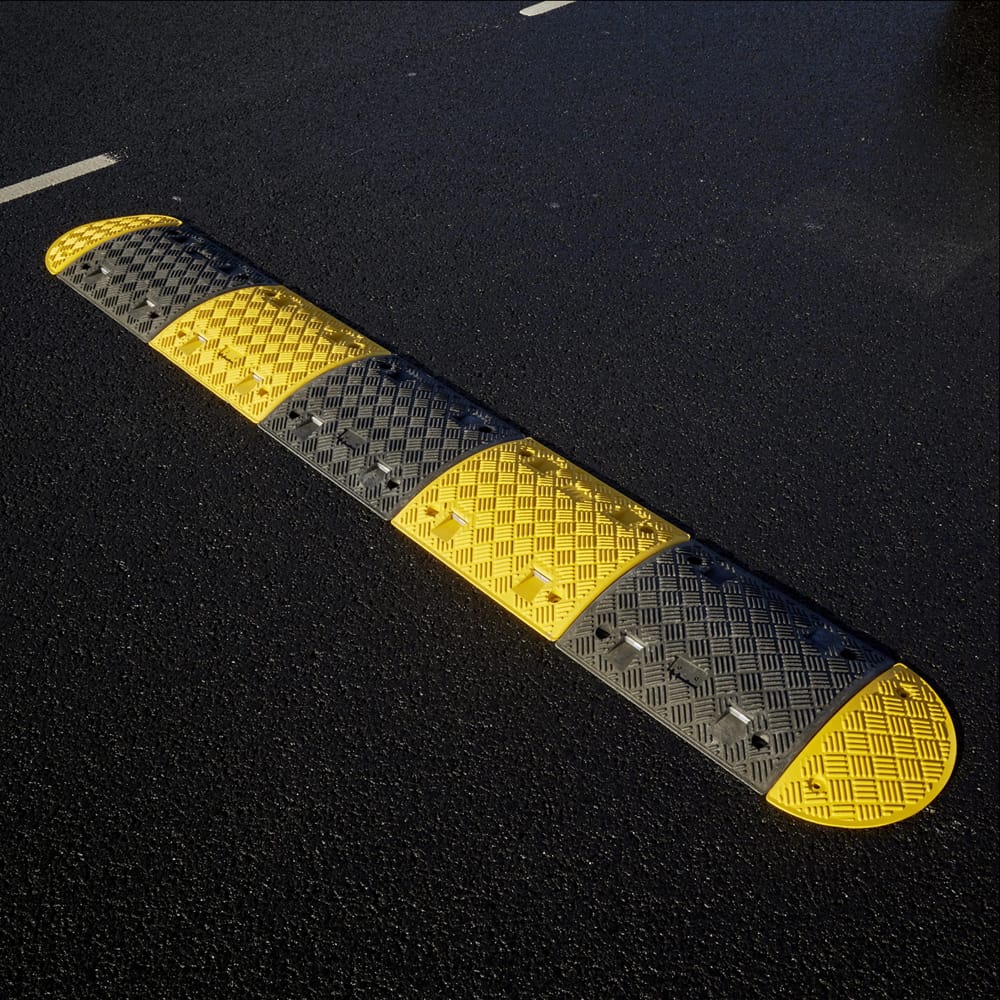
2. Choosing the bump type: For private lots we typically use either hot-mix asphalt speed humps, which are wider and more gradual, or pre-formed rubber speed bumps, which are more abrupt. Asphalt humps are built directly into the pavement and are better for larger lots and HOAs. Rubber bumps are bolted down and can be removed or relocated later, which works well for leased retail spaces.
3. Surface preparation: For asphalt humps we saw cut or grind the top layer of asphalt so the hump integrates with the existing pavement. For bolt-down rubber bumps we clean, dry, and sometimes lightly grind the surface to improve adhesion and drilling accuracy. In coastal Fort Lauderdale, where sand often blows into lots, proper cleaning is critical so the anchors do not loosen.
4. Installation: Asphalt humps are placed with hot mix, shaped with lutes, compacted with a roller or plate compactor, and then edges are sealed with asphalt emulsion. Rubber bumps are laid out, pre-drilled, then anchored with concrete or asphalt spike anchors at every manufacturer-specified location so the section does not curl.
5. Striping and signage: Once cured, we paint the bumps with reflective traffic paint (typically yellow or white) and add warning symbols or arrows as needed. In darker lots or older multifamily properties, we often recommend adding a simple “Speed Hump” sign to reduce braking surprises and noise.
6. Final inspection: We drive the route at low speed to confirm the bump feels right for the posted limit. If it is too harsh, we can adjust profile on asphalt humps with grinding within the same project window.
Curbs, wheel stops, and other asphalt accessories
Speed control is only part of the picture. Precision Asphalt Fort Lauderdale also installs and repairs curbs, wheel stops, and small asphalt accessories that keep vehicles where they belong and protect structures.
Curbs: For older strip centers and condo complexes built before modern drainage standards, we often rebuild or add concrete curbs to help contain parking areas and guide water toward existing inlets. We typically use 3,000 to 4,000 psi concrete with rebar or fiber reinforcement, formed and poured in place, then finished with broom texture for better visibility. Where existing asphalt is raveled or cracked, we cut back and rebuild the edge so the new curb is not sitting on a deteriorated lip.
Wheel stops: These keep cars from bumping into fences, landscaping, light poles, or storefront glass. We install concrete or recycled rubber wheel stops using rebar pins drilled into the asphalt or concrete below. In coastal areas with salty air, we often recommend sealed concrete or rubber to reduce long-term spalling and rebar rust staining.
Bollards and protection posts: Around loading docks, dumpster enclosures, and transformer pads, we can set steel bollards in concrete footings and cover them with plastic sleeves so they do not rust in humid Fort Lauderdale conditions. This prevents repeat damage from trucks that routinely misjudge tight backing areas.
Small drainage accessories: When we are already on site for speed bumps and curbs, many customers ask us to add or adjust small valley gutters or asphalt swales to steer water away from entrances or ADA ramps. We can mill shallow channels and re-pave low spots so water no longer ponds in walking paths.
What affects the cost of speed bump and curb work
Cost for speed bump installation and related accessories in Fort Lauderdale depends on several specific items. Knowing these ahead of time helps you budget and compare proposals realistically.
Quantity and size: A single speed hump across a narrow drive lane at a small office will cost less per unit than multiple humps spanning wide, two-way lanes at a large apartment complex. Wider lanes mean more materials, more labor, and sometimes staged traffic control.
Type of materials: Hot-mix asphalt humps usually have a higher upfront cost than basic rubber bumps, but they blend with the pavement and last longer under heavy use. Rubber is quicker to install and easier to remove, which some landlords prefer on leased or reconfigurable sites. For curbs, reinforced concrete costs a bit more than plain concrete but lasts longer near delivery areas.
Site condition: If we have to repair base failures, deep cracks, or severe raveling before installing humps or curbs, that adds to the scope. In many older Fort Lauderdale parking lots built on marginal base, we strongly recommend addressing obvious structural issues first so your new accessories do not settle or break within a year or two.
Access and phasing: Busy retail plazas along major corridors may require nighttime or early-morning work so businesses stay open during peak hours. Staged work or off-hour schedules can add to the labor cost but prevent lost revenue or tenant complaints.
Striping and signage: Including repainting of lane lines, stall markings, arrows, and symbols around the new bumps and curbs is often cost-effective while we are mobilized. We break these items out clearly on our proposals so you can choose what to handle now and what can wait.
Common problems we prevent and how we handle them
Improperly installed speed bumps and curbs cause more complaints than benefits. Precision Asphalt Fort Lauderdale focuses on avoiding the common issues we see when we are called to fix someone else’s work.
Water pooling: Raised features on a flat lot can trap water. Before we set heights for humps or new curbs, we look at where water currently travels during heavy summer storms. If a bump blocks that path, we adjust location or integrate shallow channels or side cuts so water still flows to drains.
Too aggressive or too tall: Some contractors install steep bumps that force drivers to nearly stop, causing noise and bottoming out for normal sedans. We size our profiles to match the actual speed you are targeting, typically 10 to 15 mph, and we use a consistent template to keep height within best-practice ranges.
Loose or shifting hardware: Rubber bumps and wheel stops that are only partially anchored work loose and become hazards. We drill to the correct depth, use the right anchor type for asphalt or concrete, and tighten hardware after initial traffic settles the piece. On follow-up maintenance visits, we can re-torque anchors and replace any missing hardware.
Visibility problems: Unmarked bumps and faded wheel stops are tripping hazards at night. Our crews finish with high-contrast striping and can add reflectors at key points. On properties with older residents or frequent nighttime traffic, we recommend wider paint bands and more reflective glass beads in the coating.
Operational issues: Sometimes tenants or residents complain that a bump is in the wrong place. When possible, we mock up placement with cones or temporary rubber units for a week. That trial period lets you see how traffic reacts before you commit to permanent asphalt installation.
What Fort Lauderdale customers should do before hiring
If you are planning speed bump installation or curb work in Fort Lauderdale, a little prep on your end will make the project smoother and help you choose the right contractor.
Clarify the goal: Decide whether your main concern is cut-through traffic, resident speeding, protection of storefronts, or improved drainage control. The layout and type of bump or curb will differ for each goal. Bring incident notes, photos of near misses, or complaints from tenants so we can target the problem areas.
Check property rules and approvals: HOAs and condo associations often require a board vote before adding speed humps or changing parking layouts. Many commercial tenants have language in their leases about parking access and delivery routes. Get those conversations started early so you are not held up after you receive a proposal.
Ask about base and drainage evaluation: When you talk to any contractor, ask if they will inspect the asphalt structure and drainage patterns, not just “put in bumps.” If they cannot explain how they will prevent ponding or cracking around the new work, that is a red flag.
Request clear, line-item pricing: A proper proposal for this type of work should spell out the number, size, and type of speed bumps, linear feet of curb, number of wheel stops, and all related striping and signage. Precision Asphalt Fort Lauderdale provides itemized estimates so you know exactly what you are paying for and can scale the scope up or down if needed.
Plan for maintenance: Painted markings and rubber accessories in South Florida sun will not last forever. Ask about recommended repainting intervals and hardware checks. We typically suggest a quick visual inspection every rainy season and a more thorough review every 2 to 3 years, especially for busy multifamily and retail properties.